Similar Posts
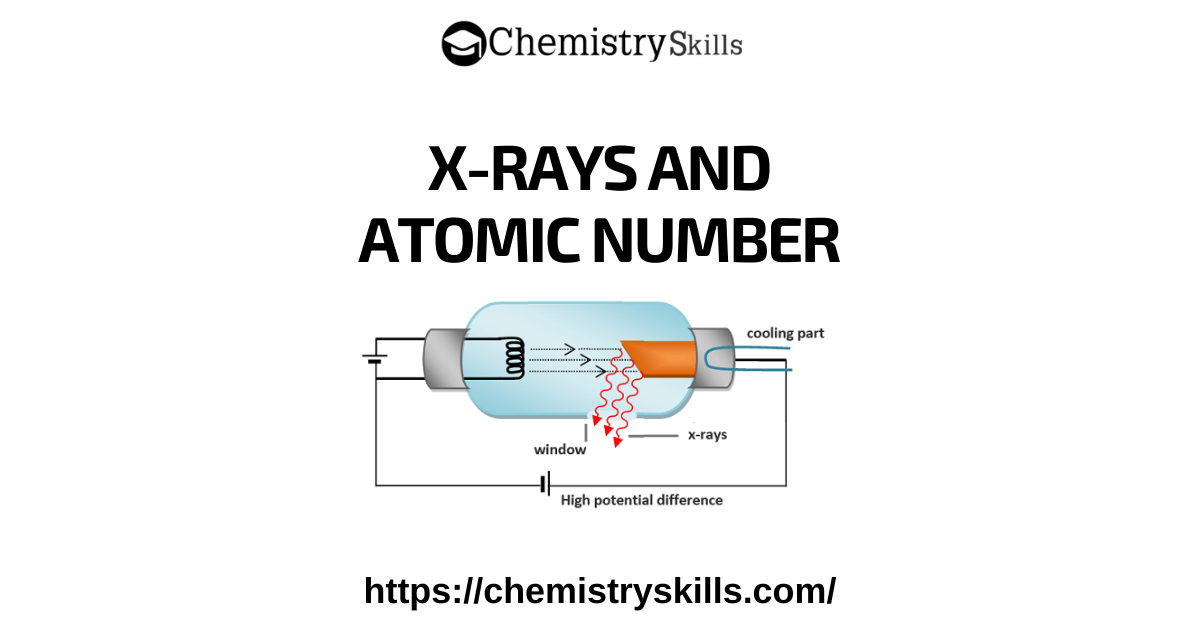
X-Rays and Atomic Number
These rays, which are produced when rapidly moving electrons collide with the heavy metal anode in the discharge tube, is called X-rays. Explanation: Energy is released in the form of electromagnetic waves when the electrons are suddenly stopped. In the discharge tube, the electrons produced by a heated tungsten filament are accelerated by high voltage….
Gaseous State Quiz Online
Gaseous State concepts are essential to learning for every level in chemistry courses. Here, we have compiled many Gaseous State quizzes free for students of grades 11 and 12. We hope you will find this very useful for your regular exam preparations and entry tests at undergraduate levels, particularly for medical and engineering students (MDCAT,…
Chemical Bonding Quiz Online
Chemical Bonding concepts are essential to learning for every level in chemistry courses. Here, we have compiled many Chemical Bonding quizzes free for students of grades 11 and 12. We hope you will find this very useful for your regular exam preparations and entry tests at undergraduate levels, particularly for medical and engineering students (MDCAT,…
Solutions Quiz Online
Solutions concepts are essential to learning for every level in chemistry courses. Here, we have compiled many Solutions quizzes free for students of grades 11 and 12. We hope you will find this very useful for your regular exam preparations and entry tests at undergraduate levels, particularly for medical and engineering students (MDCAT, ECAT, NUST,…
Plank’s Quantum Theory
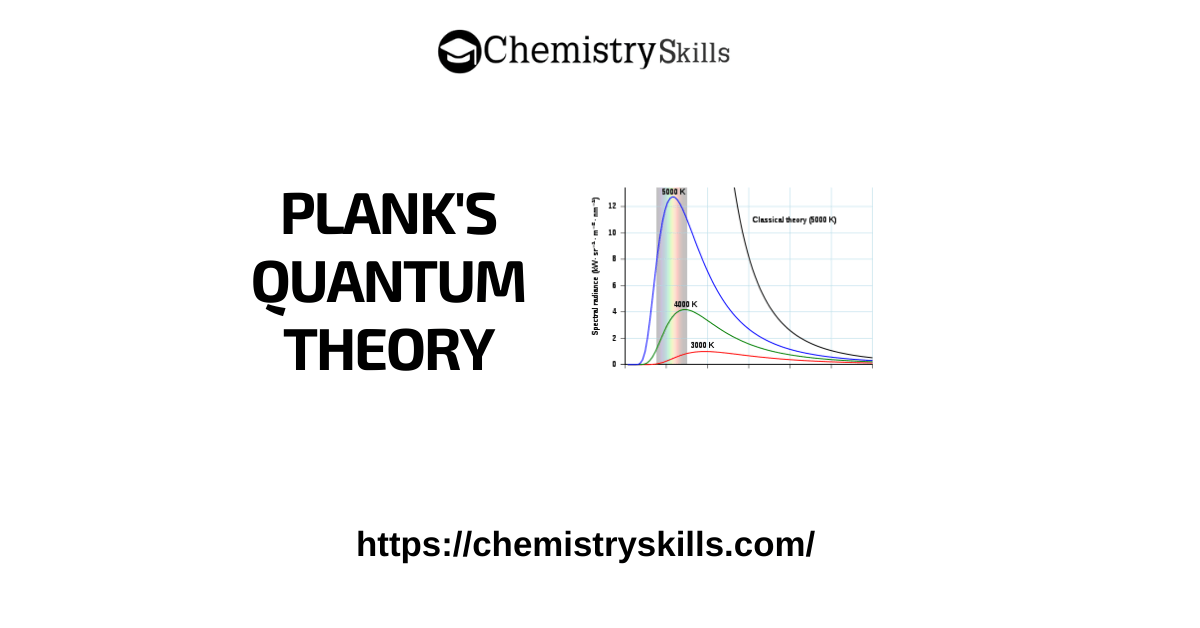
In 1900, Max Planck proposed the quantum theory to explain the emission and absorption of radiations. Heated objects give off these radiations. According to his revolutionary hypothesis, energy travels in a discontinuous manner and is composed of a large number of tiny discrete units called quanta. Main postulates of Plank’s Quantum Theory: The main points…
Spectrum
A visual display or dispersion of components of white light, when it is passed through a prism is called a spectrum. Explanation: When radiation of light is passed through a prism, the radiation undergoes refraction or bending. The extent of bending depends upon the wavelength of photons. Radiation of longer wavelength is bent to a…