MOLECULAR FORMULA DEFINITION
A formula which tells the actual number of atoms present in a molecule of a substance is known as molecular formula.
Examples: H2O2 and C6H12O6 are the molecular formulas of hydrogen peroxide and glucose respectively.

A formula which tells the actual number of atoms present in a molecule of a substance is known as molecular formula.
Examples: H2O2 and C6H12O6 are the molecular formulas of hydrogen peroxide and glucose respectively.

The word chromatography originates from the Greek word ‘khromatos’ meaning color writing. Definition: A technique used for separating the components of a mixture by their distribution between a stationary and a mobile phase is called chromatography. Chromatography Principle: Chromatography is a method used primarily for the separation of a sample mixture and involves the distribution…

Definition: The relationship, which shows the effect of simultaneous changes in pressure and temperature on the volume of given mass of a gas is called ideal gas law or combined gas law. Mathematical Form: (General gas equation) Mathematically, it is expressed as PV = nRT This equation is derived by combining Boyle’s law, Charles’ law…

Introduction: In 1662, Boyle found a relationship between volume and pressure of gases. He announced this relationship in the form of a law known as Boyle’s law. Statement: “At constant temperature, volume of a given mass of a gas is inversely proportional to pressure exerted on it.” OR “Product of pressure and volume of a…
The general gas equation is not applicable to real gases at the all the temperature .and pressure. In order to make it applicable to real gases Van der Waals’ made correction in volume and pressure of the gases and derived an equation known as Van der Waals’ equation. Volume Correction The actual volume of gas…
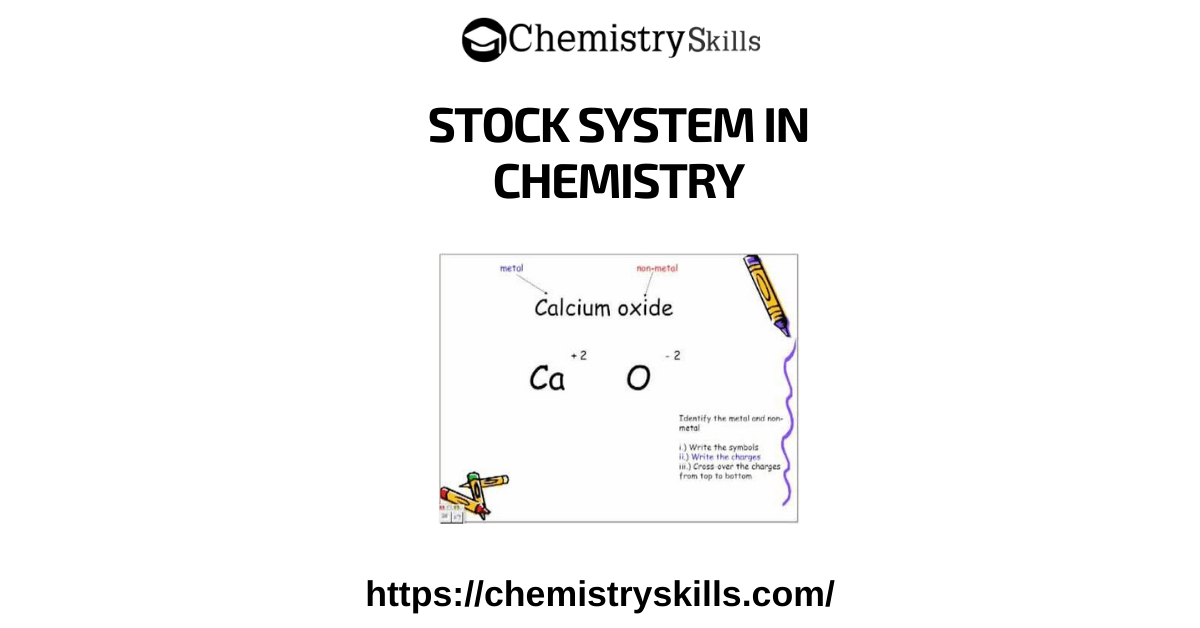
The stock system in chemistry is used for naming ionic compounds. There are some metals, which actually have more than one possible oxidation state. The stock system let us know which version of that metal ion we are considering. For example, copper can be either from a Cu+1 or Cu+2. Similarly, iron can form Fe+2…
Dimensional analysis in Chemistry is often a tricky concept for students to get. Still, it is a significant one and one that you will use throughout all of your chemistry classes. Dimensional analysis is the process we use to convert a value from one unit or set of units to another. Some important questions to…