How Soap perform cleansing action?
Soaps and detergents perform the cleaning action because the polar parts of their molecules are water soluble due to hydrogen-bonding and non-polar parts remain outside water.
Soaps and detergents perform the cleaning action because the polar parts of their molecules are water soluble due to hydrogen-bonding and non-polar parts remain outside water.
Intermolecular Forces Definition Chemistry: The attractive forces that exist between the individual particles (molecules, atoms or ions) are called intermolecular forces. (Van der Waals’ forces). The physical state of a substance depends on the strength of intermolecular forces. The properties of liquids such as boiling point, heat of vaporization, vapour pressure, surface tension and viscosity…

A formula which tells the relative number of atoms present in a compound is known as empirical formula. Examples: NaCl, HO and CH2O are the empirical formulas of sodium chloride, hydrogen peroxide and glucose respectively. Determination of Empirical Formula for Organic Compounds: To determine empirical formula percentage of each element present in a compound is…
“When a molecule loss or gain one or more electrons, is called Molecular Ion or Polyatomic ion.” Examples of Polyatomic ions: CH4+, CO+, N2+ etc. Formation of Molecular Ion: Cationic molecular ions are more abundant than anionic Molecular ions. These ions can be generated by passing high energy electron beam or alpha particle…
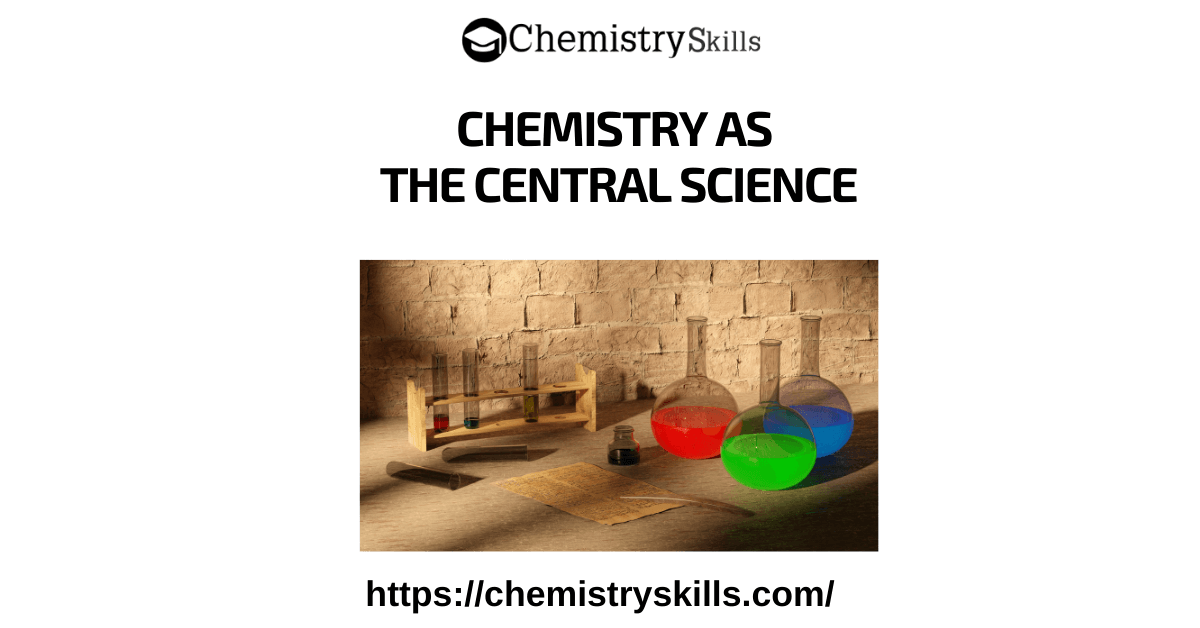
Students & professionals from other sciences quite often ask the question, why is chemistry called the Central Science. Is it physics with the fundamental laws small blocks of built atoms added mass that allows the calculations to take place and prediction of the final product Or Is it chemistry that enables thought process atoms to…

The attractive forces between the positive end of one molecule with the negative end of other molecule are called dipole-dipole forces. Explanation: In case of HCl, There is much electronegativity difference between hydrogen and chlorine. Due to this chlorine being more electronegative develops a partial negative charge whereas hydrogen develops partial positive charge. Hence the…

Many elements exist as a mixture of their isotopes. The atomic masses of such elements depend upon the number of their isotopes and their natural abundances. This is why their atomic masses are in fraction. This can be explained through following example, EXAMPLE: A sample of neon is found to consist of 20Ne, 21Ne and…